

An Assistant Editor’s Journey as a Rare Disease Mom
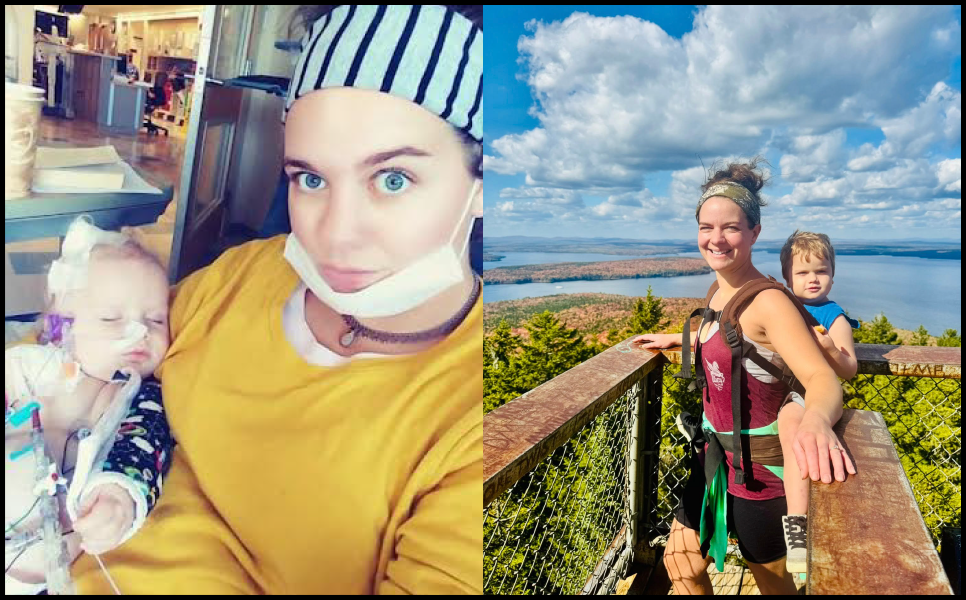
By Emily Patrick
Though Valentine’s Day and Presidents Day are the most widely-recognized and talked about holidays in the month of February (okay, aside from Superbowl Sunday), there are many other observances in our year’s shortest month. For example, February 2 is National Tater Tot Day and February 11 is, oddly enough, National Don’t Cry Over Spilled Milk Day and National Latte Day. There are many other humorous and bizarre observances in the month of February. I won’t list them all, but look them up and thank me later.
All joking aside, the last day of February is one that is near and dear to my heart. February 28 is Rare Disease Day, a global observance, “Raising awareness and generating change for the 300 million people worldwide living with a rare disease, their families and carers.” (Rarediseaseday.org). So, what qualifies as a rare disease and why is this day especially personal to me? A disease is considered rare when it affects fewer than 1 in 2000 people.
At 9 months old, my son, Atlas, was diagnosed with X-Linked Nephrogenic Diabetes Insipidus, a rare genetic kidney disorder that affects 4…in a million! That’s just one of the reasons my guy is so special.
According to rarediseaseday.org, there are many universal challenges faced by those living with a rare disease: lack of scientific knowledge and reliable information can lead to a delay in diagnosis, or even a misdiagnosis. When one is lucky enough (or unlucky enough, depending on how you look at it) to get a diagnosis, the need for specialized treatment can be a barrier and often, known treatments and care lag behind the everyday reality families are faced with.
I’ve experienced all of these challenges with Atlas. After bringing him home from the hospital, he struggled almost immediately. He lost too much weight in the first week, and then he couldn’t gain weight. Feeding was difficult almost from the start. He threw up after almost every feeding some days, and he eventually was diagnosed with failure to thrive.
His doctor tried everything she knew: concentrating his formula, trying different formulas, reflux medications and even referred him to gastro. Nothing worked, and even worse, there was nothing “visibly” wrong anyone could put a finger on. It was the scariest time in my life. I felt like a failure, like it must be my fault he isn’t gaining weight, he isn’t developing and doing the things he should be. It took a serious toll on my mental health.
Everything came to a head after a round of vaccinations when he was 9 months old. That evening, his foot monitor went off (yes, thankfully I’m one of those over-protective moms who bought an expensive home oxygen and heartbeat monitor- it was the only way I could sleep), indicating his oxygen had dipped dangerously low.
He felt hot to the touch, and I mean HOT. I took his temperature and it was above 104 degrees. We took him over to the ER where they recorded his temperature as 104.7 degrees. After monitoring his heart and his breathing, the ER doctor on call noticed something “odd” in his breathing pattern and, though he was most likely just spiking a fever in response to the vaccines, she decided to err on the side of caution and send him to Bangor for further testing and monitoring. That one decision saved his life.
I rode with him in the ambulance to Bangor, with legendary EMT Kevin Springer keeping me calm the whole way. When we arrived, however, initial testing showed a sodium level “incompatible with life.” I’ll never forget those words. At 181, Atlas’s sodium was the highest those doctors and nurses had ever seen in a child or an adult. It was so high, they retested it, assuring me it must have been a mistake. It wasn’t.
Initial scans also showed something that looked like bleeding in his brain. These later turned out to be calcifications from an uncontrolled calcium level in his blood during his first 9 months of life, but that’s when I lost it. In what seemed like an instant, my son was the sickest patient on the pediatric floor at Eastern Maine Medical Center, with a room full of doctors and nurses around him just trying to get him stabilized. No one could tell me if he would make it through the next several hours, let alone days, weeks or years.
He was promptly diagnosed with meningitis and a blood infection, but no one could tell me what was causing any of it. Over the next few days, Atlas improved, by the grace of God, and the doctors started ruling things out and honing in on a few possible diagnoses, but it would take weeks for the genetic testing to come back.
After three weeks in the Pediatric ICU, Atlas was stabilized, and we were pretty sure we had our diagnosis. The day before we were supposed to go home, it confirmed what we all had been thinking: X-linked NDI. For me, the diagnosis was a huge relief. Finally, I knew Atlas’s failure to thrive wasn’t my fault. It all started to make sense. Still, it took him almost dying for us to get to a diagnosis, and then I got angry…why had everyone missed all the signs? What if we hadn’t been the lucky ones and he didn’t make it? Why hadn’t I pushed harder for answers sooner? Why hadn’t his doctor?
The diagnosis was just the beginning. Since that time, Atlas has seen a host of specialists: PT/OT, Speech Therapists, Pediatric Surgery (he still has a feeding tube to this day), an Endocrinologist, a Neurologist, a Geneticist, a Nephology team, a Nutritionist, a Urologist, and more. All of these specialists follow Atlas’s progress along with his regular doctor.
But, because he has such a rare disease, I often feel like they each only see a little piece of his condition: no one gets the “big picture.” No one is the “expert.” That’s where I come in. As parents of a child with a rare disease, we learn early on to trust ourselves, to advocate fiercly for our children, to do research, to talk with other parents and see what their experience has been…how it’s similar and how it’s different.
That’s why Rare Disease Day is so important. Without awareness, more kids like Atlas and more families like mine will continue to fall through the cracks. I never thought this could happen to me, to my child, but even though these diseases are rare, they affect an estimated 300 million people and their families and caregivers.
So, by all means, celebrate National Blame Someone Else Day on February 13 or National Drink Wine Day on February 18, but as February comes to a close, please do me a personal favor and go to rarediseaseday.org to see how you can get involved or just learn something new about your “rare” friends and neighbors.