

Courtesy Moosehead Lakeshore Journal 1-22-2026 Edition
By Carla Ritchie, President, Moosehead Regional Land Trust
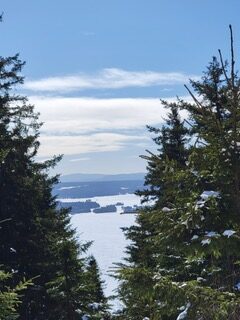
One winter day, a group of hardy hikers slogged their way up Burnt Jacket Mountain, in Beaver Cove. Luckily it was a year of good snow, and the snowshoers busted a trail to the summit! It was a lovely day with clear views. Unfortunately, the public will no longer have this opportunity.
As you have likely heard, Burnt Jacket Mountain is no longer open to the public. The issue of public access to privately owned land is of statewide concern.
A working group convened by two state agencies recently released a draft report in response to a State of Maine Legislative directive1 to examine this issue. The group analyzed information on trends in the public use of private lands, met with the public and solicited public comment.
The report highlights the cultural and economic significance of the tradition of public access to private lands in Maine. The Executive Summary of the draft report states: “The status quo is no longer sustainable, and immediate action is needed to support land owners who voluntarily provide access” The report contains a comprehensive list of recommendations, including addressing systemic challenges, improving education and enforcement, supporting landowners, and securing predictable long-term arrangements where appropriate.
Our recreation-based economy is dependent upon the long-standing tradition of public access. Approximately 92 percent of Maine land is private ownership, and the public has benefited from access to much of this private land for centuries. The report is both sobering and hopeful, stating: “Although this report identifies some challenges faced by Maine’s public access system, it is important to recognize that this system is, in many respects, a success story built on decades of responsible stewardship and collaboration.
Private landowners, snowmobile and ATV clubs, conservation organizations, and the State have collectively invested significant time, resources, and care to maintain working landscapes that support both economic productivity and recreational opportunity. In many cases, public access exists not in spite of active forest management, but because of it—through maintained road networks and long-term land stewardship that benefits multiple uses.” 2
The final report is due to the legislature in February. Clearly there is more work to be done, and the Moosehead Regional Land Trust is following this topic closely.
1 LD 1308: Resolve, Directing the Department of Inland Fisheries and Wildlife (MDIFW) and the Department of Agriculture, Conservation, and Forestry (DACF) to Examine Issues Related to Public Access to Privately Owned Lands,2 Pg 4 www.maine.govDRAFT_Public,Private,Land LegislativeReport